There’s a particular kind of frustration that comes with washing your hair in the morning only to watch it turn flat, shiny and greasy by lunch. It's not your imagination and it's not just the heat—it’s your scalp trying to tell you something: it’s out of balance.
Your scalp naturally produces an oily substance called sebum to help protect the skin, support its moisture barrier and keep hair from becoming overly dry. The amount you produce is influenced largely by genetics, hormones, age and skin type. But during the summer, heat, sweat, humidity and product buildup can all change how that oil behaves—making your roots look and feel greasier much faster.
You don’t have to spend the entire season washing more often or layering on dry shampoo. A consistent, scalp first routine can help remove buildup, support a more balanced scalp environment and keep hair feeling fresher between washes.
Why is My Scalp So Oily?
Oil itself isn’t the enemy. Sebum is produced by sebaceous glands attached to your hair follicles, and it plays an important role in keeping the scalp and hair protected.
Problems can arise when excess sebum mixes with sweat, dead skin cells, pollution and hair product residue. Instead of leaving the scalp feeling comfortably moisturized, that combination can accumulate around the roots, weigh down the hair and contribute to a greasy or congested feeling.
Some people are naturally more prone to an oily scalp because of their genetics or hormonal activity. Hormonal shifts associated with stress, menstruation, perimenopause and menopause may also affect oil production. Fine or straight hair can appear oily especially quickly because sebum travels down the hair shaft more easily than it does through thick, curly or textured hair.
In other words, your scalp may not suddenly be producing dramatically more oil. Summer simply creates the ideal conditions for that oil to become more noticeable.
Why Summer Makes an Oily Scalp Seem Worse
Here’s the part most people get wrong: oil isn’t the enemy. Your scalp is supposed to produce it. Sebum is a normal, healthy function of the skin on your head, just like it is everywhere else on your body.
The problem isn’t the oil itself—it’s what happens when the scalp environment falls out of balance, and summer is full of things that can tip it in that direction. Heat stimulates greater sebum production. Overwashing can strip the scalp, while underwashing allows grease and buildup to accumulate. Dry shampoo, when used too frequently, can contribute to buildup rather than simply absorbing oil. Heavy styling products and silicones can also sit on the scalp and weigh down the roots. Add in hormones, sweat and stress, all of which can spike during the peak summer months, and you’ve got the perfect recipe for a stressed scalp.
The result? A scalp that feels congested, irritated and overwhelmed—and hair that gets greasy faster than it normally would.
The Case for Treating Your Scalp Like Skin
If the skin on your face felt oily, congested and uncomfortable, you probably wouldn’t just keep powdering over it and hope for the best. You’d cleanse it thoroughly, exfoliate when needed and use products designed to support its moisture barrier.
Your scalp deserves the same care and respect—it is skin, after all, just skin that happens to also grow hair.
That's where NULASTIN's scalp first approach comes in.

The NULASTIN Solution: Vibrant Scalp Reset Ritual
NULASTIN’s Vibrant Scalp Reset Ritual pairs two products designed to work in tandem to help support microcirculation and a calm, clean, balanced scalp environment: the Vibrant Scalp Scrub and Vibrant Scalp Mask.

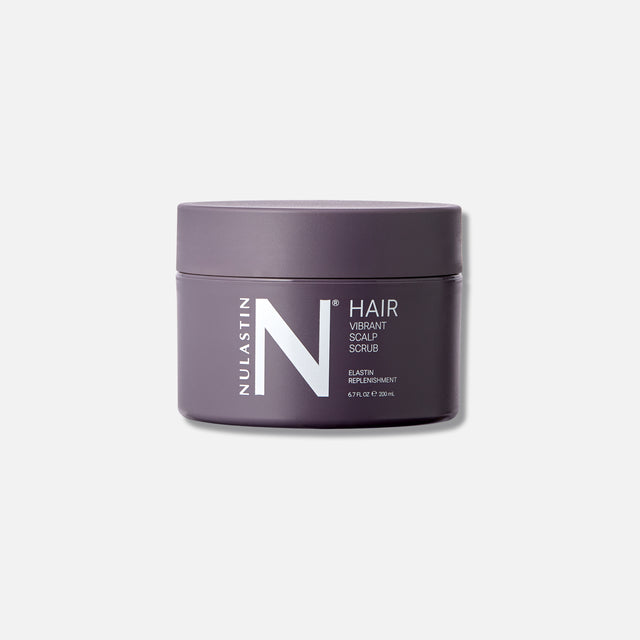
Vibrant Scalp Scrub
Powered by plant based exfoliants, lactic acid and charcoal, this purifying scalp scrub helps clear buildup and decongest pores, creating the ideal foundation for healthier looking hair. It’s also formulated with fermented extracts to support the scalp microbiome and reinforce a strong skin barrier. The result: a scalp that feels fresh, balanced and reinvigorated.
In clinical studies, participants noticed an 82% reduction in the oily appearance of hair and an 86% reduction in visible scalp buildup.*
Use it twice weekly before your shampoo and conditioner (or Scalp Mask) routine.

Vibrant Scalp Mask
This triple-action, red light inspired mask is the secret to a calm, balanced scalp—and seriously incredible hair. Bioactive polyphenols help balance the scalp and shield elastin from environmental stressors, while a scalp revitalizing blend supports microcirculation at the root for overall scalp vitality. It's also formulated with biodesigned elastin to help reduce visible shedding over time, plus a deep conditioning complex that leaves hair feeling instantly softer, smoother and silkier.
In clinical studies, 88% of panelists showed clinically demonstrated improvement in scalp oiliness** and 91% experienced a calmer, more soothed scalp.***
Use it once a week in place of your normal conditioner.
Together, this duo supports a healthy scalp microbiome and a more stable pH, the kind of environment where hair can actually thrive instead of just surviving until the next wash. The end result is a scalp that feels fresher, cleaner and more balanced, and hair that looks healthier because of it. Oh, and noticeably less oil, too.
More Ways to Manage an Oily Scalp This Summer
Don't overdo dry shampoo. While dry shampoo can temporarily soak up grease when you’re in a pinch, leaning on it daily can actually make buildup worse. Use it only when you really need it—don’t use it as a replacement for your wash day.
Rinse after sweating. Whether the cause is a workout, a beach day or a 90-degree commute, allowing sweat, oil and product residue to sit on the scalp can leave it feeling congested. A quick water rinse can help after light sweating, while a gentle shampoo may be more effective at removing residue after a particularly sweaty day.
Reconsider your styling products. Heavy creams, glossing treatments, oils and silicone rich stylers can quickly weigh down the hair when applied near the scalp. Concentrate richer formulas on the mid-lengths and ends, where the hair typically needs more conditioning.
Watch your water temperature. Hot water can strip the scalp, which sometimes can trigger it to produce more oil. Lukewarm water is gentler and just as effective.
Be consistent, not reactive. A scalp routine works best when it becomes a consistent habit, not just something you reach for only after things have already gone sideways.

The Bottom Line
An oily scalp in summer isn't something you have to just live with. It's usually a sign that your scalp environment needs support, not more product piled on top of the problem. The reassuring thing is that with a consistent, scalp forward routine—like the Vibrant Scalp Scrub and Mask— you can help support your scalp environment and give your hair a real shot at staying fresher, longer.
Frequently Asked Questions
Why does my hair get oily so fast in the summer? Heat and sweat play a role, but an oily scalp is usually a sign of a dysregulated scalp environment. Overwashing, underwashing, product buildup, heavy styling products and even stress and sweat can all disrupt your scalp's natural balance and lead to excess oil.
How often should I wash oily hair? Is it bad to wash it every day? Not necessarily, but overwashing can sometimes backfire by stripping the scalp and triggering it to produce even more oil in response. A balanced routine that supports the scalp, rather than just washing more frequently, tends to be more effective long term.
What's the difference between Vibrant Scalp Scrub and Vibrant Scalp Mask? The Scrub is designed to lift away buildup and reset the scalp without overstripping it. The Mask follows to calm, condition and support a healthier scalp environment. Together, they promote a cleaner, healthier looking, more balanced scalp environment.
How often should I use a scalp scrub if I have oily hair? This depends on your scalp's needs, but many people find success using a scalp scrub a few times a week as part of a regular routine, then following with a mask to condition and rebalance.
Can product buildup make my scalp oilier? Yes. Heavy styling products, silicones and excess dry shampoo can all congest the scalp over time, which can contribute to a greasier appearance even shortly after washing.
*Based on results obtained immediately after a single use of Vibrant Scalp Scrub
**Clinically measured results immediately after application of Vibrant Scalp Mask
***Consumer perception immediately after one use of Vibrant Scalp Mask