For years, collagen has owned the beauty conversation.
Powders, gummies, drinks, serums—collagen has been positioned as the answer for thriving skin, nails and hair. But when it comes to the structure of the hair follicle, collagen is only part of the story.
Why? Collagen doesn’t anchor the hair follicle. Elastin does.
Elastin is the protein that gives tissue its flexibility, resilience and ability to move without losing support. In the scalp, elastin helps anchor hair follicles—elastin fibers form a supportive network around the hair follicle, helping reinforce its connection within the dermis. And as elastin naturally declines with age (as early as your 20s), that support system can begin to change, too.
That’s one reason hair may start to look thinner, weaker or less resilient over time, even before more visible changes set in.
What Actually Anchors a Hair Follicle?
Your hair follicles are surrounded by an intricate support structure made up of connective tissue proteins, extracellular matrix components and elastic fibers that help maintain stability and structure within the skin. This is why hair follicle stability depends on more than collagen alone.
And one of the most important players in that system? Elastin.
Elastin fibers help create flexibility and “snap-back” support throughout the body. They allow the follicle to move, stretch and return to its normal position without the hair simply pulling out, helping strands to stay firmly anchored through daily stressors (think: brushing, washing, styling and more).
Collagen plays a different role. It provides tensile strength and rigidity to tissue. But collagen is stiff—it doesn’t stretch, recoil or move with the follicle.
The bottom line: Elastin provides flexibility and resilience, while collagen delivers tensile strength and structure. Both matter, but they’re not interchangeable.
Collagen vs. Elastin for Hair: What’s the Difference?
|
COLLAGEN |
ELASTIN |
|
Provides rigidity and structure |
Provides flexibility and elasticity |
|
Found abundantly throughout connective tissue |
Found in elastic tissues including skin and scalp |
|
Helps tissue resist tension |
Helps tissue stretch and snap back |
|
Widely talked about in the beauty industry |
Often overlooked in the beauty industry |
The beauty industry has spent years focusing almost exclusively on collagen, but elasticity matters, too.
Think about what your hair follicles go through every day:
- Brushing
- Tight hairstyles, like slickbacks or ponies
- Environmental stress
- Inflammation
- Natural aging
- Growth cycle changes
Hair follicles don’t just need strength, they need resilience. And resilience is where elastin becomes especially important.
Why Hair Changes With Age
One of the most overlooked aspects of hair aging is the gradual weakening of the skin’s elastic support system, opens in a new tab. You don’t have an endless supply of elastin. Natural levels begin declining in your 20s and unlike collagen, elastin is far harder for the body to regenerate.
Over time, this can contribute to:
- Reduced scalp elasticity
- Changes in follicle support
- Visible thinning
- Loss of density
- Reduced hair resilience
This is part of the reason hair often changes texture and fullness as we age—the scalp ages, too, and healthy looking hair starts with a healthy scalp environment.

Why Collagen Supplements May Not Be Enough
Collagen supplements are incredibly popular, but there’s an important distinction consumers often don’t understand. When collagen is consumed orally, it is broken down during digestion into amino acids and peptides—it doesn’t travel directly to the hair follicle as intact collagen.
That doesn’t mean collagen is not beneficial at all, but it does mean collagen alone may not do much good in addressing the structural elasticity and follicle support environment associated with scalp aging.
This is where elastin becomes important, especially when talking about scalp longevity, follicle resilience, aging hair and visible thinning.
The Missing Conversation in Haircare: Elastin
For decades, collagen has dominated beauty conversations. But very few brands have explored the role elasticity may play in maintaining a healthy looking scalp environment.
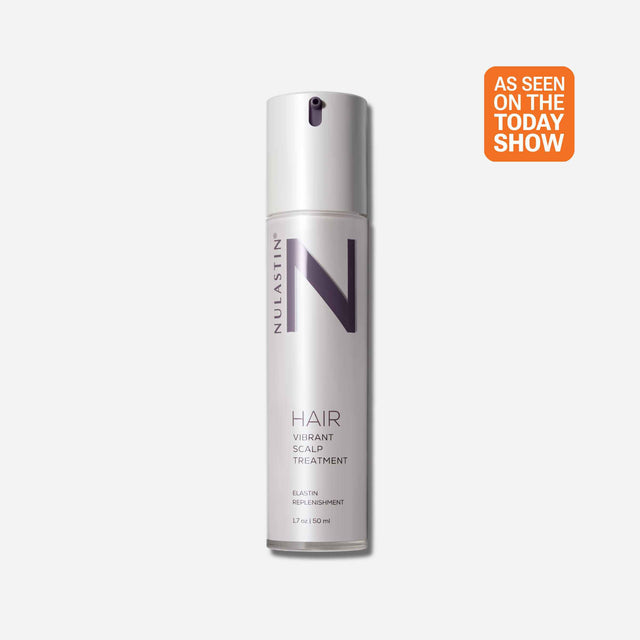
At NULASTIN®, elastin has always been central to our philosophy. Our approach is rooted in the understanding that healthy looking hair starts at the scalp and that scalp resilience matters.
That’s why our formulas are designed to support the appearance of fuller, healthier looking hair through elastin focused innovation and scalp first care.

The Future of Haircare May Be About Resilience—Not Just Growth
Future conversations around hair health likely won’t be about a single “miracle” ingredient, but about supporting the entire scalp environment.
Collagen may help support structure, but elastin helps support flexibility, movement and resilience. And when it comes to helping hair follicles stay supported within the scalp, that distinction matters.
Conclusion
For decades, the beauty industry has focused on collagen. But when it comes to the structure surrounding the hair follicle, elastin may be one of the most important—and overlooked—pieces of the puzzle.
Because healthy, resilient looking hair isn't just defined by the strands you see. It's influenced by the environment that supports them. As research continues to uncover the role elastin plays in the scalp environment, one thing is becoming increasingly clear: stronger looking, more resilient hair starts at the root.