Stress Awareness Month is just around the corner, and there is no better time to talk about one of stress's most evident yet least acknowledged consequences: hair loss. Stress is an emotional and physiological force that can disrupt the body in measurable ways. One of the most distressing of those disruptions is watching your hair thin, shed in clumps on your pillow or in the shower drain. Here lies the cruelty of the stress and hair loss connection: the more you worry about losing your hair, the more hair you lose. And it becomes a self-reinforcing cycle.
As we head into Stress Awareness Month, here’s a quick reminder that loss of hair due to stress is reversible. It is a biological reaction to a massive stimulus, and there are ways you can regrow your hair. So, let’s get the hang of what stress does to your follicles, how to identify the hair loss pattern, and the specific steps you can take to regrow your hair.
Does Stress Cause Hair Loss? The Scientific Connection
The Biology of Stress
When the body feels threatened (be it by physical threats or the pressure of a demanding work schedule), it responds by flooding the bloodstream with the key stress hormone called cortisol. The problem arises when stress becomes chronic. Prolonged high cortisol levels begin to impair physiological processes that are not needed to maintain immediate survival: the digestive system slows, the immune system weakens, reproductive hormones drop, and, most importantly, the normal hair growth cycle is disrupted. Hair follicles are exquisitely sensitive to hormonal changes, and high cortisol “tells” them to pause operations.
A study published in Nature, opens in a new tab demonstrates that increased corticosterone levels caused by chronic stress in animal models suppressed the activation of hair follicle stem cells and the growth phase of the hair cycle. This provides clear biological evidence that stress does not just correlate with hair loss - it directly causes it.
The Three Types of Stress-Induced Hair Loss
Psychological and physiological stress is associated with three distinct conditions with their own mechanism and presentations:
-
Telogen Effluvium (TE): The most common form. A major stressor immediately plunges many follicles into the telogen, or resting, phase, thereby causing them to shed hair at the same time weeks to months later.
-
Alopecia Areata: An autoimmune disease in which the immune system, which is out of control partly due to extreme stress, starts to attack the hair follicles, resulting in smooth and coin-shaped bald patches.
-
Trichotillomania: A body-focused repetitive behavior where people experience a compulsive and usually uncontrollable urge to pull out their hair in response to stress or anxiety. It requires specific psychological therapy.
Although each of the three conditions requires serious attention, Telogen Effluvium is by far the most common cause of hair loss, and the following article focuses on this factor.
Symptoms of Hair Loss Due to Stress and Anxiety: How to Identify It
The delay is one of the most disorienting aspects of stress-related hair loss. The shedding you notice today is not caused by what is stressing you today. The triggering stressor - which may be a bereavement, a difficult surgical recovery, an exam period, or a divorce - is normally followed by a two to three-month lag before the shedding can be noticed. When clumps first appear in the shower drain, the initial crisis may well be long gone by, and it is easy to overlook the connection altogether.
This late schedule can be predicted biologically. Upon shocking follicles into the telogen phase, they rest for about 100 days, and then the hair shaft is discharged, and shedding takes place. This delay is not just an academic issue to understand, but also a clinically significant issue. Knowing that your shedding began three months after a major stressor is one of the clearest diagnostic indicators that you are dealing with Telogen Effluvium rather than something more permanent.
The shedding due to stress is diffuse - it affects the entire scalp rather than concentrating in one area. Patients often complain of finding clumps on their pillow in the morning, too much hair stuck in their shower drain, or noticing far more than the typical 50-100 daily hairs accumulating in their hairbrush. The scalp starts to feel lighter, and the volume also decreases significantly.

What Does Hair Loss from Stress Look Like
Diffuse Thinning and the Part Line
The most characteristic feature of stress-induced hair loss is diffuse thinning: hair becomes thinner across the entire scalp, and the see-through effect occurs, particularly in daylight. This hair thinning from stress appears first on the crown and the top of the head.
The first obvious symptom is a broadening of the natural hair part. An area that was originally narrow now broadens with each passing week, revealing the scalp. The hairline remains intact most of the time - this distinction is vital to proper diagnosis.
What Stress Hair Loss Does NOT Look Like
Stress shedding should be distinguished from two other common conditions, which it is commonly confused with. The pattern of male pattern of baldness (androgenetic alopecia) is recessive and predictable: the hairline will move towards the temples, forming a pattern of an M-shape, and then extend to the crown. It is driven by genetic sensitivity to dihydrotestosterone, opens in a new tab (DHT), not by cortisol. Contrary to this, female stress hair loss pattern causes a gradually widening part and overall vertex thinning - but this unfolds over years or decades, not months.
Stress shedding decreases volume but not the hairline pattern. It does not recede the hairline in an M-shape. A major caution: a significant stress event can reveal underlying genetic thinning and accelerate the process. Under these circumstances, it may be necessary to treat both the stress-triggered effluvium and the androgenetic aspect.
Female Stress Hair Loss Pattern
Telogen Effluvium in women typically presents with hair loss at the top and crown (vertex), while the frontal hairline remains intact. The most common complaint is widening of the part line. Women can also notice that the circumference of their ponytail has shrunk considerably, or the hair that seemed thick now is flat and limp, even when it is styled in the usual way.
The emotional cost is difficult to overestimate. Hair is associated with identity, femininity, and confidence for most women. The fact that the hair is coming out in large amounts is another source of distress that compounds the original stressor. The emotional component is not something to be ignored; it is a clinical necessity, and any comprehensive treatment plan must address it.
Male Stress Hair Loss Pattern
Men experiencing stress-related hair loss often believe they are getting bald, and this misidentification is quite understandable. Stress-induced shedding, however, does not follow the horseshoe or M-shape pattern of genetic male pattern baldness. Rather, it presents as generalized, diffuse thinning of the entire scalp. The recession of the hairline is not dramatic; the density decreases uniformly across all areas.
The interaction between stress and genetics is an area of active clinical concern. An intense episode of Telogen Effluvium may accelerate an underlying genetic predisposition to male pattern balding. Thus, men who observe considerable shedding due to stress need to be examined at the earliest stages. It is possible to identify and address any underlying androgenetic problem at an early stage and alter the long-term trajectory.

How to Regain Hair Loss from Stress: Topical Solutions & Lifestyle Changes
Address the Root Cause
The stressor needs to be addressed before any topical treatment or supplement is added to your routine. Stress management is not a specific method but a network of several habits, and here are the ones to implement into your routine:
-
Frequent cardiovascular activity of at least 30 minutes, at least three to five days a week, lowers cortisol. It also enhances microcirculation of the scalp, which supplies more oxygen and nutrients to each follicle. Even 10 minutes of meditation per day reduces cortisol levels in a few weeks.
-
Sleep routine is non‑negotiable. During sleep, growth hormone is released, and cells (including hair follicles) repair themselves. The persistent lack of sleep increases cortisol and interferes with the processes by which hair grows back. Implement 7-8 hours of quality regular sleep to reduce stress levels.
-
Consider the mindfulness-based stress reduction (MBSR) program. This is a program that combines a range of exercises like meditation and breathing techniques to help people manage stress and anxiety. The MBSR method helps manage stressful situations, and as a result, physical and emotional well-being begins to improve, including hair regrowth.
Add Topical Treatment to Your Routine
In addition to standard clinical solutions, biodesign-based topical treatments have entered the market to supplement conventional protocols, providing effective alternatives to pharmaceutical compounds.
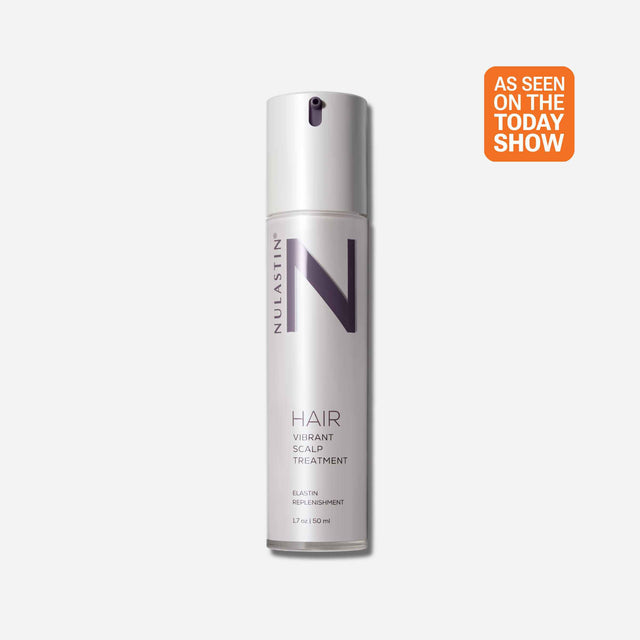
NULASTIN® Hair Vibrant Scalp Treatment is made for those seeking a science-based, clean-formula alternative. The product features a unique Elastaplex® Technology - a biomimetic blend of biodesigned signal peptides, elastin, and keratin proteins. The formula is created to strengthen hair follicles at the root and sustain the natural growth cycle to help minimize visible signs of hair falling out from stress. Unlike traditional medical solutions, NULASTIN® hair serum is vegan, dermatologist-tested, and free of sulfates, parabens, silicones, and other harmful components.
The HAIR Vibrant Scalp Treatment is typically applied twice a day, with meaningful improvements visible over several weeks to months. Notably, an independent 12-week clinical study revealed that 78% of participants reported a minimized appearance of bald spots - a result worth considering for anyone navigating stress-related thinning.

Scalp Care
The scalp is an extension of the skin, and it responds to the same stressors. Replacing sulfate-based shampoo with sulfate-free alternatives can help maintain the scalp's natural sebum, which creates a protective layer for the skin. Harsh chemical treatments such as bleaching or perming should be avoided during active shedding.
High ponytails, braids, extensions, and other forms of tight hairstyles place permanent stress on hair follicles. Heat styling should be minimized and ideally avoided for some time. Follicles that are already in a compromised state from hormonal disruption do not need the additional burden of physical trauma. Think of the scalp environment as a garden: you cannot expect seeds to germinate if the soil is continuously being dried out and chemically altered.
Diet for Hair Health
Hair is composed almost entirely of keratin, a structural protein. A diet that does not contain high-quality protein won’t have enough “materials” required to build new hair shafts. According to the Dietary Guidelines for Americans 2025-2030, opens in a new tab, take at least 1.2-1.6 grams of protein per kilogram of body weight per day. Make a priority of whole protein sources, including eggs, lean poultry, fish, and legumes. An anti-inflammatory diet based on colorful vegetables, omega-3-rich oily fish, flaxseeds, and complex carbohydrates helps to stabilize blood sugar and minimize secondary cortisol spikes.
Frequently Asked Questions
How long does it usually take for hair to grow back after stress-related hair loss?
Hair regrowth after stress-related shedding usually begins within 3 to 6 months. During the initial weeks, you can notice short, fine “baby hairs”, mainly at the part line and temples. The full recovery of hair density typically requires 9 to 12 months.
Can nutritional deficiencies worsen hair loss caused by stress?
Yes. Stress may disrupt eating habits and nutrient absorption, compromising hair follicles. The most common deficiencies involve low levels of iron, vitamin D, zinc, and biotin, which are linked to increased shedding and slower regrowth. It’s recommended to contact your doctor to identify deficiencies and get a tailored diet guide.
Can stress cause itchy scalp symptoms?
Yes, and it is a more widespread symptom than you may think. High cortisol levels stimulate systemic inflammation, which affects the scalp's skin barrier. This may cause seborrheic dermatitis (oily, yellowish flakes and redness) or scalp psoriasis (silvery itchy plaques). Both of them flare in response to psychological stress and can be accompanied by telogen effluvium.
Does scalp massage help stimulate hair growth?
Scalp massage can aid regrowth by enhancing blood flow and delivering oxygen and other nutrients to follicles. Although massage is not a cure on its own, it can be used as a supplement combined with stress management, proper nutrition, and topical treatments.
To Sum Up
So, answering the question “Can stress cause hair loss?”, yes - stress-related hair loss is frightening, but not permanent. Telogen Effluvium is a temporary failure of the hair growth cycle. The good news is that the follicles are alive. With effective stress management and appropriate treatment, a noticeable improvement in hair growth is typically observed after several months of resolving the original trigger. If you’re experiencing noticeable shedding, the first step is to consult a specialist and begin restoring your hair follicle potential.